How to leverage AI software to increase profitability and scale agile print production
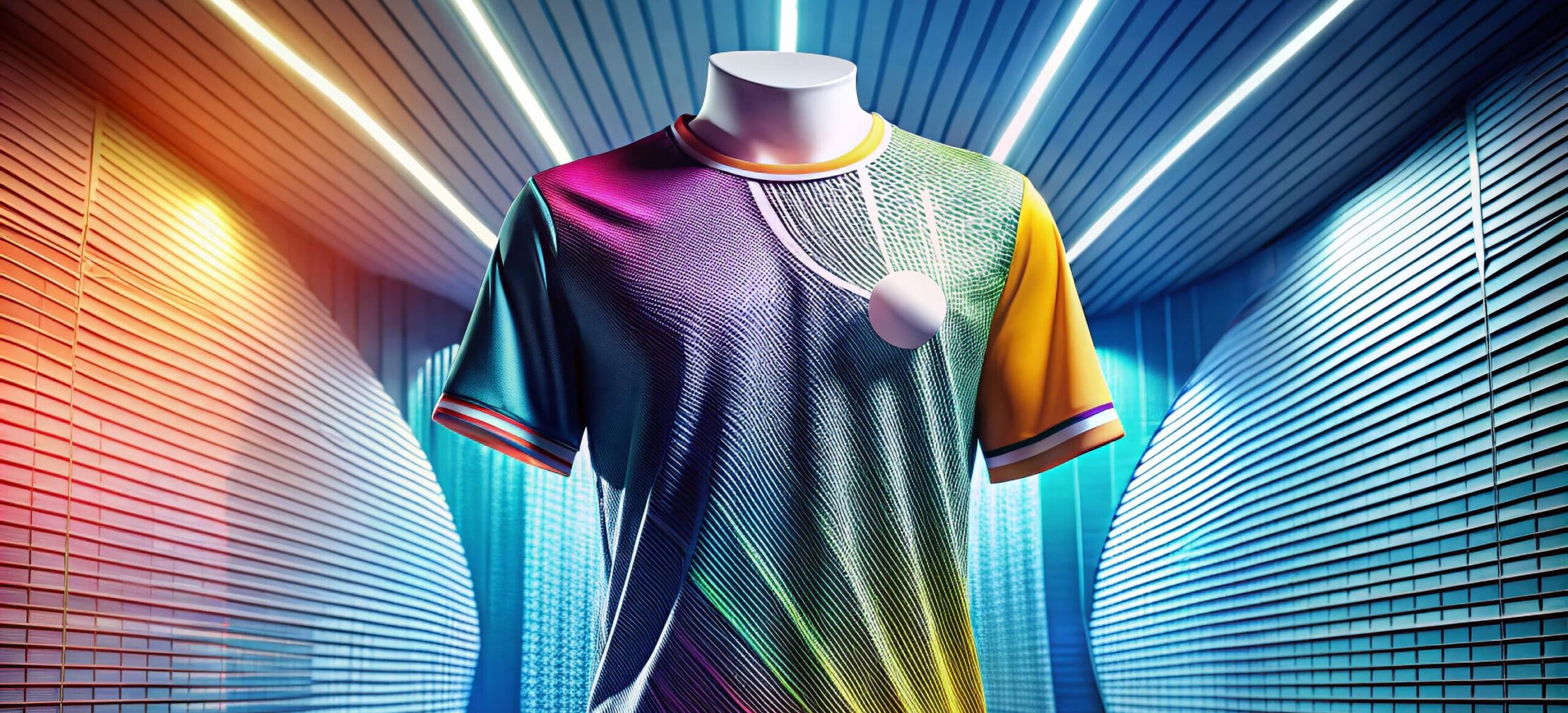
AI-driven automation is transforming sportswear production by eliminating manual pre-press bottlenecks. Companies like Super Nova Sports have boosted fabric efficiency to over 80% and halved delivery times using intelligent nesting and variable data automation. This shift from archaic processes to agile, error-free workflows is now essential for profitable, sustainable scaling.
The Sportswear market is experiencing unprecedented growth. Based on Statista data, and specific to printed or tailored garments, the broader activewear market, which includes customised and printed athletic gear, is now projected to reach over $720 US billion by 2034. With this explosion in demand comes a pressing consumer expectation for mass customisation, sustainable practices, and rapid turnaround times.
All apparel manufacturers face an urgent mandate: automate or be left behind. Industry leaders like Super Nova Sports and Ryozo International were struggling with severe pre-press bottlenecks and unsustainable fabric waste. By integrating AI Sublimation Software into their workflows, these forward-thinking business‘s eliminated manual variable data entry, boosted fabric efficiency to over 80%, and reduced delivery times by more than half, establishing a highly profitable, agile, and environmentally responsible production model.
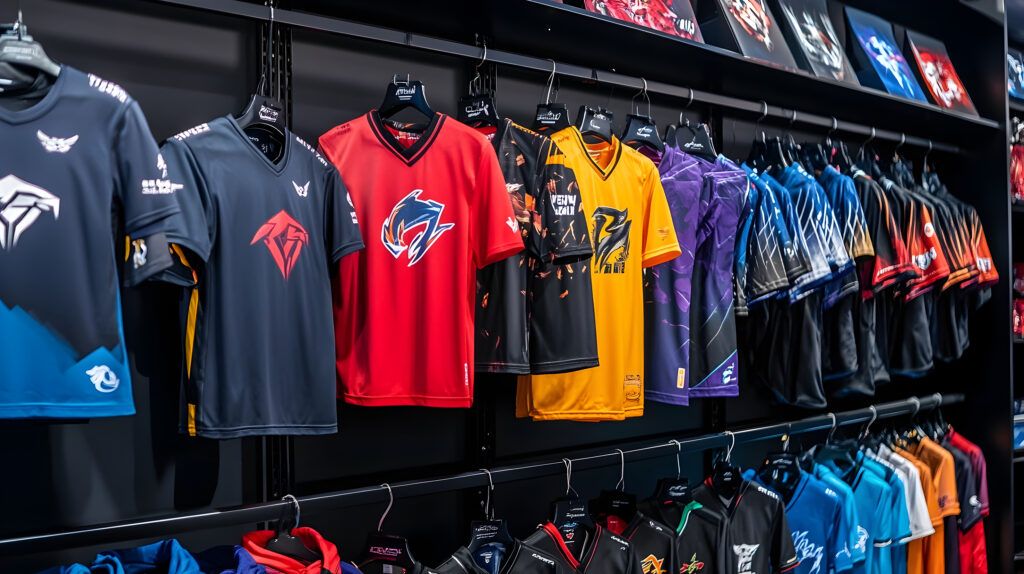
Colorful and Captivating Display of E Sports Branded Merchandise Including Jerseys Caps and Gaming Equipment for Passionate Fans and Competitive Players
Over the past few decades, digital textile printing hardware has evolved dramatically. Today, innovations continue to address the markets demand for small scale and industrial level dye-sublimation printing. Technologies – from manufacturers such as: Durst, Mimaki, Epson, EFI Reggiani and MS printing solutions can output anywhere from 30 metres per hour to 600 metres. However, this remarkable acceleration on the production floor has exposed a glaring operational vulnerability: pre-press artwork preparation.
Without an agile, automated data-handling infrastructure, the benefits of high-speed printing and automated cutting or packing technologies are entirely negated.
Case Study: On-Demand, Scalable Production Challenges for Sports Apparel
For digital print shops like Super Nova Sports and Ryozo International, the primary challenge was not printing speed, but the heavily manual, error-prone workflows within their art departments.
Producing customised teamwear requires collating massive amounts of variable data – player names, numbers, and sizing – and meticulously mapping this information onto complex garment patterns. Traditionally, graphic designers were forced to manually enter this data and manually nest the resulting patterns for printing.
This archaic approach created three critical threats to the business:
- Severe Production Bottlenecks: While printers sat idle waiting for files, highly skilled designers were trapped executing repetitive, low-value data entry.
- Unsustainable Material Waste: Manual fabric nesting typically yielded a maximum material efficiency of just 61.07%. In an era where material science and circular economies demand radical waste reduction, discarding nearly 40% of premium polyester and synthetic fabrics is an environmental and financial failure.
- Costly Human Error: Manual data handling inevitably leads to misprints, incorrect sizing, or misspelt names, forcing costly reprints that erode profit margins and damage client trust.
The Solution for Production Efficiency
To survive and scale, these manufacturers required a systemic technological overhaul. They implemented AI Sublimation Software – a transformative workflow automation engine designed specifically to bridge the gap between design and high-speed production.
The software integrated seamlessly with the tools their designers already used, acting as an intelligent bridge between Excel data and CorelDRAW or Adobe Illustrator. The solution delivered a holistic approach to automation:
- Variable Data Automation: Client orders – containing team rosters, numbers, and sizes – were imported directly from Excel. The software automatically populated this data across pre-graded digital garment templates, eliminating manual data entry.
- Intelligent Media Nesting: The system’s algorithmic nesting feature automatically arranged the varying garment panels for maximum printer efficiency, replacing the wasteful manual layouts.
- Print-Ready Export via Hot Folders: Once the AI optimally nested the designs, it automatically generated print-ready files and routed them to the RIP software, feeding high-speed dye-sublimation printers without human intervention.
These examples of software implementation sit at the heart of a broader, modern tech ecosystem for the industry. When combined with advanced 3D design software like Optitex, Clo3D or Browzwear, alongside high-efficiency sublimation technology, and automated laser-cutting and fulfilment packing technologies, it creates an unbreakable chain of agile, on-demand manufacturing.
The integration of AI Sublimation Software yielded immediate, measurable, and highly lucrative results for both Super Nova Sports and Ryozo International.
- 30% Reduction in Material Waste: By replacing manual layouts with intelligent algorithmic nesting, fabric efficiency surged from 61.07% to 80.19%. On a standard production run, this saved 1.97 metres of fabric per job. A massive leap forward for both operational profitability and sustainable manufacturing.
- 80% Time Saved in Pre-Press: Jobs that previously took hours of manual configuration are now completed in mere seconds. The art department was transformed from a business bottleneck into a streamlined production asset.
- 100% Error-Free Production: Automated accuracy ensured perfect placement and data mapping on every print, entirely eliminating the cost and environmental impact of misprinted garments.
- Accelerated Delivery: Early adopters reported reducing overall production and delivery times by more than 50%.
The impact on the human workforce was equally profound. As Zafar Iqbal, Production Manager at Super Nova Sports, noted:
“AI Sublimation Software Plugin has transformed our production line. The automated nesting and personalisation features have saved us countless hours, allowing us to focus on our business. It’s an absolute gamechanger!”
This sentiment is echoed by Muhammed Bilal, CEO of Ryozo International, who stated:
“Switching to AI Sublimation Software was the best decision we’ve made. The cost savings alone are incredible… We feel like we’re getting the work of three designers for the price of one.”
Preparing for High-Speed Personalisation:
As the sportswear apparel industry sprints toward a highly digital, highly customised future, traditional manual processes are no longer viable. The staggering reductions in waste and production time achieved by Super Nova Sports and Ryozo International prove that AI-driven automation is not just an operational luxury – it is a critical necessity for survival, profitability, and environmental stewardship.
The technological journey does not end here. AI Sublimation are actively developing agentic AI functionalities to further streamline the supply chain. Soon, AI customer service agents will integrate directly with ERP systems, handling client communications via email and WhatsApp to provide instant order statuses, thereby creating a seamless loop from initial inquiry to automated packing and fulfilment.
Now is the time to rethink your production strategy and eliminate the bottlenecks holding your business back