Is Your Textile Tech Future-Proof, or Is It Holding Your Business Back?
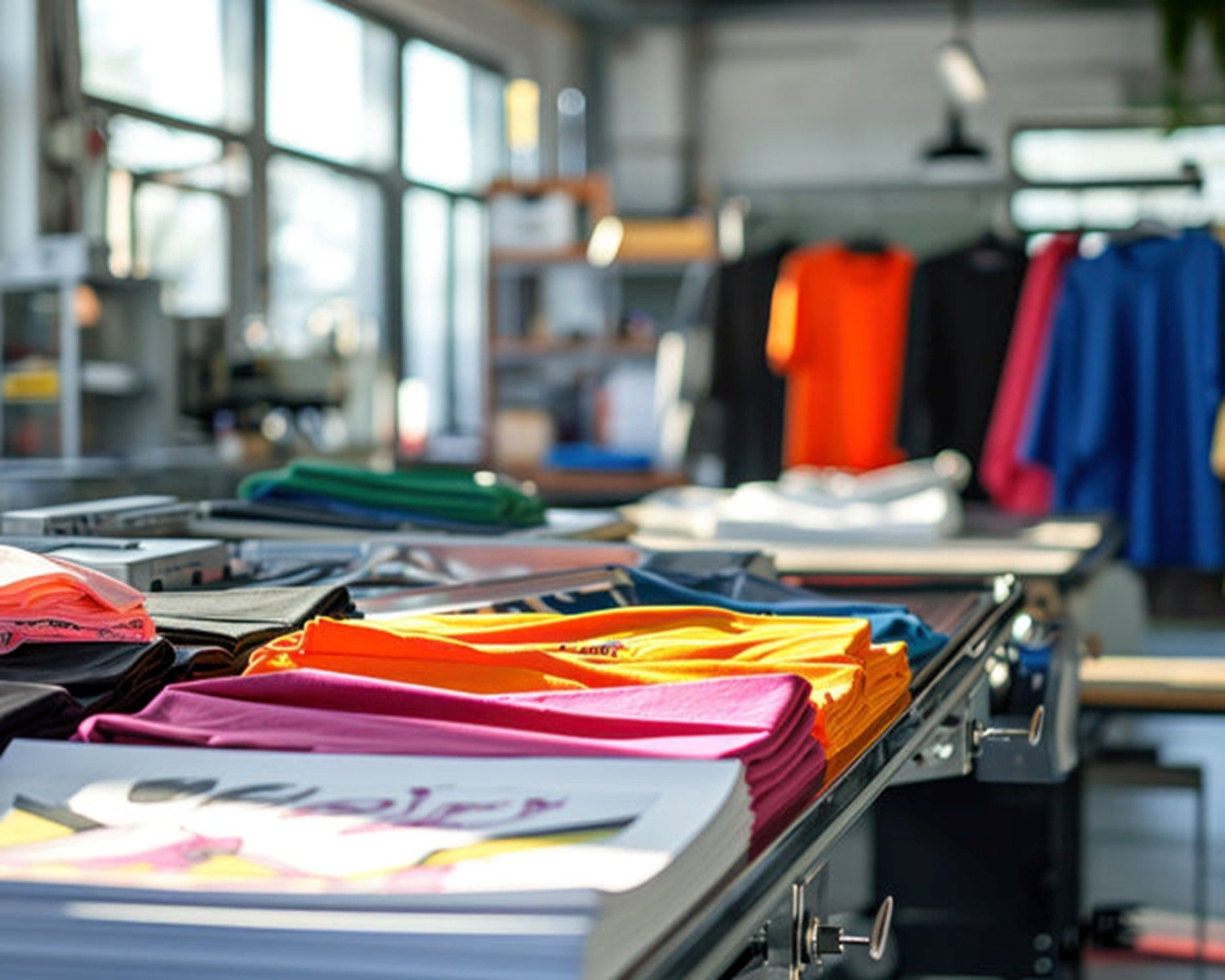
The textile print market is rapidly shifting toward high-value, on-demand customisation. Industry leaders like Epson, Mimaki, and Kornit emphasise that upgrading to integrated OEM solutions is now critical. These advanced systems replace unreliable hardware with automated workflows, helping businesses reduce waste, slash running costs, and maintain the agility required to stay competitive.
Textile printing is rapidly emerging as one of the most versatile and profitable areas of the print market. From soft signage and interior décor to fashion and customised apparel, print companies are increasingly investing in textile capabilities to diversify their offering and tap into new revenue streams. However, as demand grows, so too does the need for solutions that can deliver consistent quality while maintaining speed and efficiency.
At the same time, a shift towards shorter runs and on-demand production is reshaping how print businesses in textile operate. Traditional production models are being challenged by customers seeking greater flexibility, faster turnaround times and more sustainable processes. As such, printers are looking beyond pure print performance, instead prioritising technologies that can streamline workflows, reduce waste and simplify production.
With innovation in textile print being driven by a combination of hardware advancements and smarter production ecosystems, we sat down with several manufacturers to explore the importance of investment and the risks of standing still in a fast-moving market.
Rapid advances
First, Phil McMullin, head of sales commercial and industrial at Epson UK, said digital textile print is the main area within commercial print that is seeing rapid advances in technology. He set out how this is primarily because the established print equipment manufacturers are chasing the opportunity created by the boom in customisation and personalisation of apparel.
“Previously, this market was largely unfamiliar to Western markets; with Chinese manufacturers utilising Epson printheads to drive their generally unsophisticated print systems,” McMullin said. “Now the OEMs have become involved, we are seeing big leaps in print quality but also critically in reliability.
“The textile market over the last four years has been flooded by direct-to-film (DTF) printers, mostly manufactured in China. Like in the dye-dsub and direct-to-garment (DTG) markets a decade or so ago, these printers have been filling the gap left open by the big Japanese manufacturers. Whilst these units have helped grow the DTF market, they generally suffer from multiple issues such as inconsistent print quality, poor reliability and high total cost of ownership.”
With this, McMullin said there has therefore been a pent-up demand for a full OEM solution, adding that Epson has seen a huge take-up for its first dedicated roll-to-roll DTF printer, the SureColor G6000.
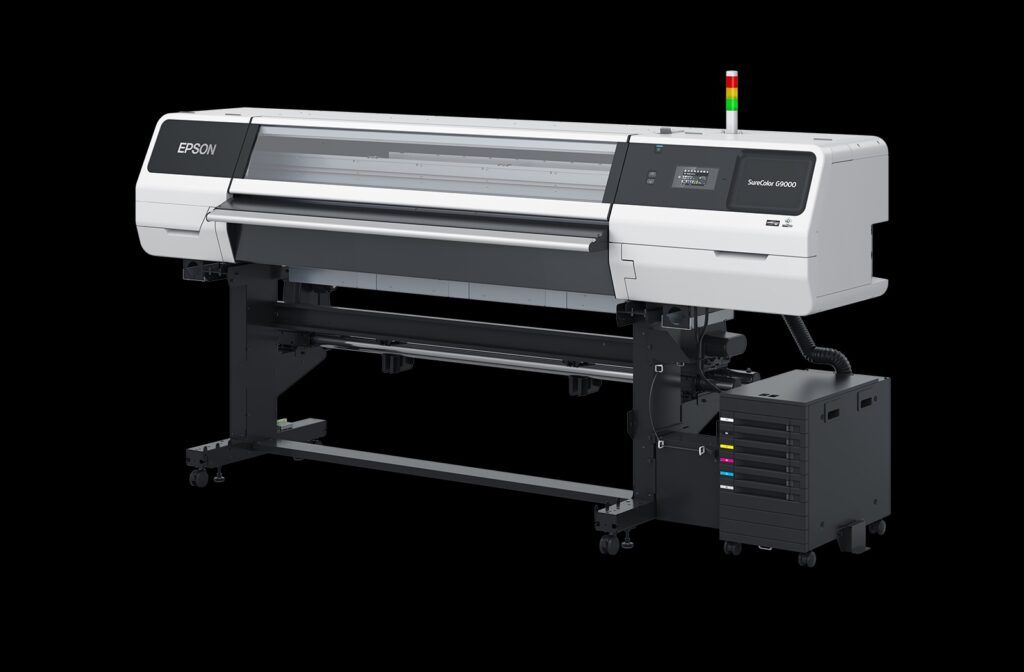
Epson will display its new SureColor G9000 on its stand at the FESPA Global Print Expo 2026: a high-production Direct-To-Film printer delivering greater productivity and reliability
“Garment decorators that have switched to Epson have seen the benefits of machine-controlled maintenance, inks and hardware designed from scratch to work perfectly in unison, and therefore much improved uptime and less wastage,” he said. “All this delivers lower total running costs and therefore better profitability.”
McMullin added Epson is building on the success of the SureColor G6000 with the recent announcement of its big brother, the G9000. The latter has both a wider print area and more rapid print speeds to appeal to higher volume producers of DTF.
“As always, all system components including the printheads and ink are both designed and manufactured by Epson to ensure the highest print quality and market leading reliability,” he said, adding that the SureColor G9000 will be shown on the Epson stand at the FESPA Global Print Expo 2026.
Future-Proofing Production: Why Standing Still is No Longer an Option
Next, Arjen van der Sluijs, product manager at Mimaki Europe, said investing in new textile print equipment is essential for businesses that want to stay competitive and respond to shifting market demands.
“The print industry is evolving quickly, whether it’s shorter production runs, customisation, sustainable manufacturing, or faster turnaround expectations,” he said. “Upgrading enables print providers to work more efficiently, deliver higher quality results, and expand their application range.
“Standing still makes it harder to meet customer expectations and remain profitable in a rapidly evolving market. Older systems may struggle with speed, quality, reliability, material versatility, or even energy efficiency, all of which can directly impact margins.
“Competitors who adopt the latest technology can typically respond faster, deliver higher quality, operate more sustainably, and offer a broader range of applications. At the same time, we always advise companies to assess their real production needs and to choose a technology partner that thinks ahead with them. Equipment should be future‑proof, reliable, and flexible enough to grow with the business.”
As to how Mimaki can help, van der Sluijs picked out several solutions, including the new TS200‑1600 and TS330‑1800 on the dye-sublimation side. He said the TS200‑1600 stands out for its reliable colour performance, extended colour gamut with orange and violet, as well as fluorescent pink and yellow in one ink set.
As for the TS330‑1800, van der Sluijs said this is well suited to higher productivity and larger applications due to a wider print width and enhanced efficiency. As such, he said it can be used to produce pieces across interior textiles, décor, and commercial soft‑signage work.
At the industrial end of the line, Mimaki offers the Tiger600‑1800TS, which van der Sluijs said is engineered for high‑volume, high‑speed production. He highlighted how Italian sportswear manufacturer Erreà replaced its fleet of 28 digital printers with a streamlined Mimaki setup featuring three Tiger600 units, with this improving efficiency, colour consistency, and production control.
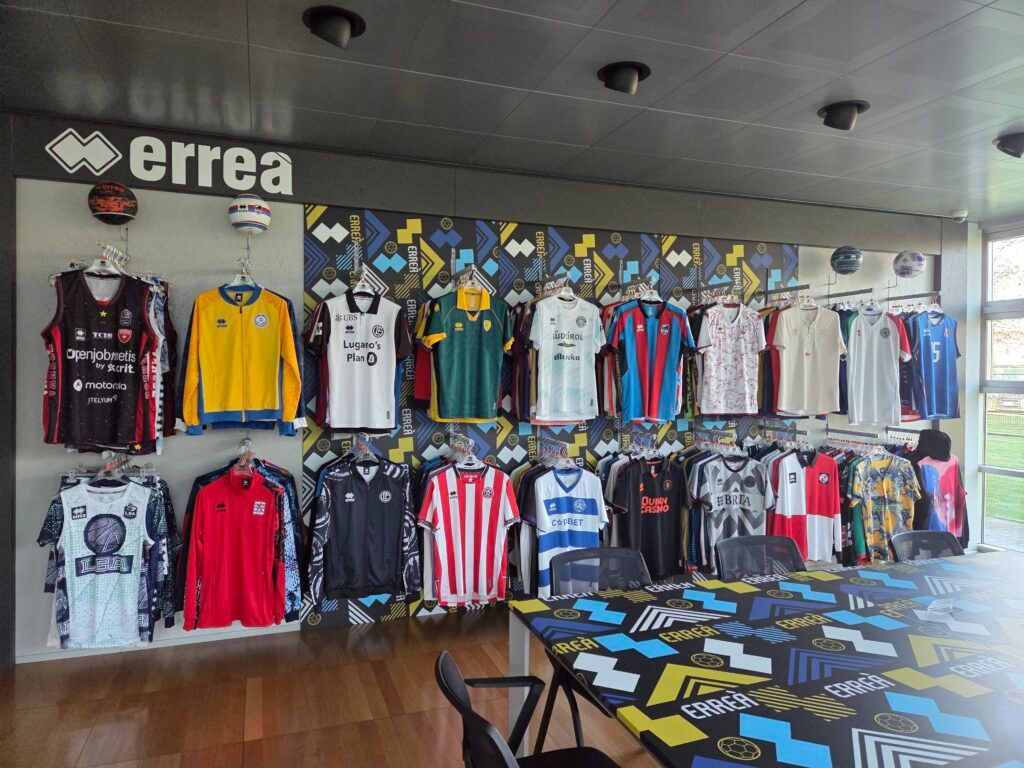
Italian sportswear brand Erreà replaced a fleet of 28 digital printers with a streamlined Mimaki setup featuring three Tiger600 units
For customers exploring emerging technologies, van der Sluijs said the TxF Series is a solid choice for DTF across garment decoration and customised textiles. In addition, the TRAPIS system offers transfer printing on a range of fabrics, including natural fibres and synthetic materials such as artificial leather, polyester, and polyester blends.
Important investment
Finally, Guy Yaniv, president of Kornit Digital Europe. said with brands and printers under pressure to reduce inventory risk, shorten turnaround times, and respond more quickly to changing consumer demand, investment in modern textile print technology has become increasingly important.
“Advanced digital textile printing systems enable businesses to produce high-quality prints with greater flexibility, lower minimum order quantities, and reduced waste compared with traditional analogue methods,” Yaniv said. “Modern platforms also integrate automation, workflow software, and smart production capabilities, helping operators increase efficiency and maintain consistent output.
“Companies that delay upgrading their equipment risk facing higher production costs, slower turnaround times, and limitations in the types of work they can accept.”
Yaniv also highlighted competitive risk, saying businesses that invest in modern solutions can often offer shorter runs, faster delivery, and higher levels of personalisation, which are becoming key differentiators in the market. He added that without upgrading, companies may gradually lose market share to more agile competitors.
As for Kornit solutions, Yaniv pointed to the Kornit Atlas MAX series, an industrial DTG solution built for high-volume customised apparel production. The platform integrates pre-treatment, printing and curing into a single process and is designed to deliver consistent colour quality and efficient workflow for on-demand garment decoration.
For roll-to-roll textile print, Kornit offers the Kornit Presto MAX, a DTF digital textile printer intended for applications such as fashion fabrics, sportswear textiles and home décor. In addition, at the industrial end of the portfolio, the Kornit Apollo platform is designed for automated, high-volume garment decoration, combining Kornit’s MAX technology with industrial-scale production capabilities to support large-scale on-demand apparel manufacturing.